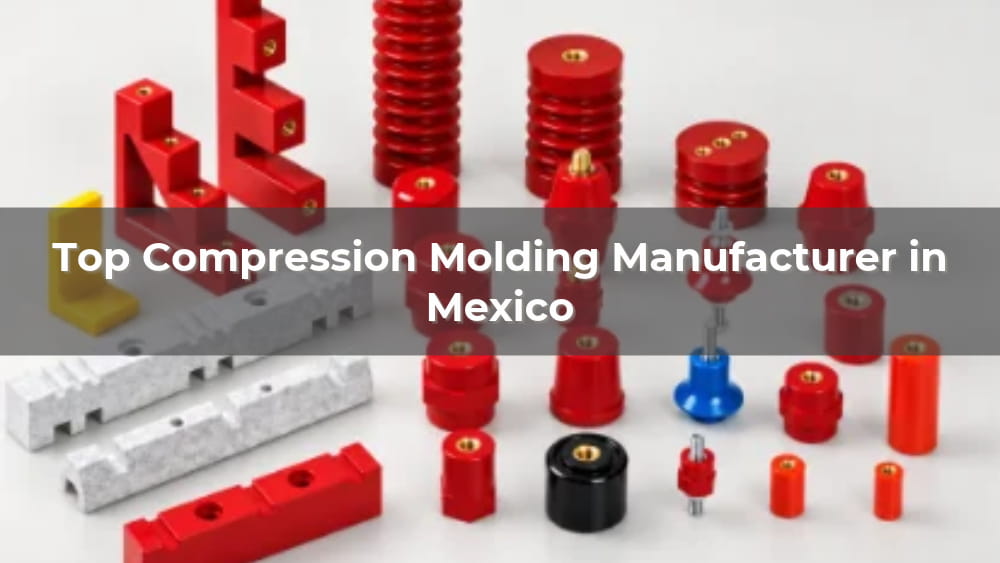
Have you ever considered how many industrial components rely on compression molding? From rubber seals and gaskets used in automotive manufacturing to phenolic electrical components and fiberglass-reinforced SMC parts used in industrial equipment, compression molding supports a wide range of applications across Mexico's manufacturing sector. But how do you choose the right compression molding manufacturer for your project? How can you compare tooling capabilities, production capacity, material expertise, quality control, and delivery reliability without overlooking hidden costs?
This guide to the Top 5 Compression Molding Manufacturers in Mexico 2026 introduces five companies with documented compression molding capabilities, covering thermoset plastics, phenolic materials, rubber components, and composite parts. By comparing their main products, manufacturing strengths, and service capabilities, you can identify suitable Compression Molding Suppliers in Mexico for custom parts, industrial applications, and OEM production.
The List of Compression Molding Brands in Mexico
| Manufacturer | Main Compression Molding Products | Compression Molding Capabilities |
|---|---|---|
| SUSDURA | SMC molded composite parts, BMC molded components, fiberglass-reinforced thermoset parts, electrical insulation components | SMC/BMC material development, custom mold engineering, compression presses with a published range of 63–4,500 tons |
| Plenco de México | Phenolic molded components, melamine-phenolic parts, BMC molded components, custom thermoset parts | Compression, injection, transfer, and injection/compression molding; 50–600-ton press capacity |
| HULTEK | Compression-molded rubber gaskets, rubber bushings, rubber isolators, custom rubber seals | Rubber compression molding, in-house tooling, prototype development, material testing, and dimensional inspection |
| Bakelita y Plásticos Deses | Bakelite handles, phenolic molded components, custom Bakelite parts | Phenolic resin compression molding, mold design, mold manufacturing, and custom part production |
| Elastómeros Sigma | Compression-molded rubber gaskets, rubber grommets, molded rubber plugs, custom rubber components | Rubber compression molding, material selection, physical testing, and custom molded-part production |
1. SUSDURA
Headquarters: China, Zhejiang, Ningbo.
Main Compression Molding Products: Custom SMC molded composite parts, BMC molded components, fiberglass-reinforced thermoset parts, electrical insulation components.
Company Overview: SUSDURA specializes in engineered thermoset composites, integrating SMC and BMC material development, mold engineering, compression molding, and quality inspection. Its published compression press range of 63–4,500 tons supports projects involving different component sizes and molding-force requirements. With a focus on serving international industrial markets, SUSDURA is relevant to Mexico’s compression molding supply chain, particularly for projects involving fiberglass-reinforced components, electrical insulation parts, and custom industrial composites. Its integrated material and tooling capabilities help coordinate compound formulation, mold design, and finished-part specifications, making it an option for Mexican manufacturers seeking specialized SMC/BMC expertise.
Company Advantages: SUSDURA combines SMC/BMC material expertise with mold engineering and high-tonnage compression molding, allowing these elements to be developed as part of one manufacturing program. Its focus on reinforced thermoset composites distinguishes it from Mexican suppliers whose compression molding businesses primarily serve rubber or phenolic components.
Suitable Customers: Electrical equipment manufacturers, industrial equipment OEMs, composite component manufacturers, infrastructure equipment suppliers, switchgear manufacturers, buyers of custom SMC/BMC parts.
2. Plenco de México
Headquarters: Mexico, Querétaro, Santa Rosa Jáuregui.
Main Compression Molding Products: Phenolic molded components, melamine-phenolic molded parts, BMC components, custom thermoset molded parts.
Company Overview: Plenco de México specializes in custom molding of thermosetting materials, including phenolic compounds, melamine-phenolic materials, and bulk molding compounds. Its published processing capabilities include compression, injection, transfer, and injection/compression molding, supported by presses ranging from 50 to 600 tons. The company also provides mold maintenance, deflashing, post-curing, and other secondary operations. Located in Querétaro's industrial region, Plenco de México serves manufacturers requiring custom thermoset components and production support for applications with defined material and dimensional requirements. Its connection with the wider Plenco organization provides additional technical resources in materials, tooling, and molding.
Company Advantages: Plenco de México offers a broad range of thermoset molding processes and press capacities, making it suitable for projects that require process selection based on material and part geometry. Its published support capabilities include dimensional evaluation, PPAP, statistical quality analysis, and secondary finishing, which can help support structured industrial qualification programs.
Suitable Customers: Automotive suppliers, electrical component manufacturers, industrial equipment OEMs, manufacturers of phenolic components, buyers of custom thermoset molded parts.
3. HULTEK
Established: 1981.
Headquarters: Mexico, Nuevo León, García.
Main Compression Molding Products: Rubber gaskets, rubber bushings, vibration isolators, custom rubber seals.
Company Overview: HULTEK is a Mexican manufacturer specializing in custom rubber components produced according to customer drawings and specifications. Its manufacturing processes include compression molding, transfer molding, injection molding, and rubber extrusion. The company works with natural rubber and synthetic elastomers such as EPDM, SBR, neoprene, NBR, silicone, and FKM. Its in-house tooling workshop supports mold development, maintenance, and engineering changes, while its laboratory can perform tests involving hardness, tensile properties, aging, compression set, and other material characteristics. Based in García, Nuevo León, HULTEK serves Mexican and international customers in automotive, electrical, construction, appliance, and oil and gas industries.
Company Advantages: HULTEK combines rubber compound knowledge, in-house tooling, and laboratory testing, giving it a practical advantage for custom rubber compression molding projects. Its experience with multiple elastomers is particularly relevant when seals, isolators, and gaskets must meet specific hardness, aging, or compression-set requirements.
Suitable Customers: Automotive suppliers, electrical equipment manufacturers, appliance manufacturers, oil and gas equipment companies, construction product manufacturers, industrial rubber component buyers.
4. Bakelita y Plásticos Deses
Headquarters: Mexico, Mexico City.
Main Compression Molding Products: Bakelite molded handles, custom phenolic resin components, molded Bakelite parts.
Company Overview: Bakelita y Plásticos Deses is a Mexican resin-processing manufacturer with more than 80 years of experience according to its company website. Its Bakelite product line can be manufactured using compression or injection molding, and the company also provides mold design and machining. Its compression molding specialization is relevant to custom phenolic parts that require specified dimensions, surface appearance, and texture. Based in Mexico City, the company offers a local manufacturing option for Mexican businesses developing Bakelite components and other resin-based parts. Its wider plastics business includes materials and processes outside compression molding, so the scope of each project depends on the specific material and manufacturing method required.
Company Advantages: Bakelita y Plásticos Deses has a long-standing focus on Bakelite processing and combines mold manufacturing with custom part production. This combination is useful for projects in which phenolic material selection, mold design, and the required surface finish need to be considered together.
Suitable Customers: Bakelite component manufacturers, electrical component suppliers, household product manufacturers, industrial equipment OEMs, buyers of custom phenolic parts.
5. Elastómeros Sigma
Established: 2007.
Headquarters: Mexico, Hidalgo, Tizayuca.
Main Compression Molding Products: Rubber gaskets, rubber grommets, molded rubber plugs, custom molded rubber components.
Company Overview: Elastómeros Sigma is a Mexican manufacturer of custom rubber products for automotive, electrical, chemical, food-related, and general industrial applications. Its documented processes include compression, injection, and transfer molding, as well as continuous and steam vulcanization. The company manufactures molded products such as grommets, circular gaskets, plugs, and other rubber components, using natural rubber and synthetic elastomers including EPDM, SBR, neoprene, NBR, and silicone. Based in Tizayuca, Hidalgo, Elastómeros Sigma serves the domestic market with custom rubber parts and maintains a quality management system aligned with ISO 9001:2015.
Company Advantages: Elastómeros Sigma offers several rubber molding processes and an in-house physical testing laboratory, helping it address different part geometries and material requirements. Its focus on molded rubber products and sealing components distinguishes it from suppliers concentrated on thermoset composite panels or phenolic parts.
Suitable Customers: Automotive suppliers, electrical equipment manufacturers, food-related equipment manufacturers, water and wastewater equipment suppliers, industrial rubber component buyers.
Frequently Asked Questions
1. Can a rubber compression molding supplier also manufacture SMC or BMC composite parts?
Not necessarily. Rubber compression molding commonly uses elastomers such as EPDM, NBR, silicone, and natural rubber, while SMC and BMC are fiber-reinforced thermoset composite materials that require suitable compounds, molds, heating systems, and process controls. Before requesting a quote, identify the exact material family and ask for examples of comparable parts produced using that material. For rubber seals or vibration isolators, evaluate rubber-specific tooling and testing experience; for fiberglass-reinforced electrical housings or industrial composite components, verify SMC/BMC molding capability and the relevant electrical, mechanical, or thermal test facilities.
2. How can I check whether a compression molding supplier in Mexico can meet my required delivery date?
Ask the manufacturer to provide separate lead times for mold design, tooling fabrication, first-trial samples, sample approval, and mass production. For reference, some Mexican rubber molding suppliers publish standard production lead times of around 6–8 weeks, but this should not be treated as a universal schedule or as including new tooling. Request a dated project plan and confirm how many trial rounds are included, how quickly the supplier can correct rejected samples, and whether raw materials are already available before committing to a delivery date.
3. Why can the initial compression mold quote be low but the final tooling cost much higher?
The original quote may exclude mold modifications, trial runs, sample inspection, spare inserts, maintenance, or transportation. Request an itemized quotation covering mold design, machining, initial trials, the number of included correction rounds, and additional revision charges. For example, if a mold costs $8,000 and produces 10,000 accepted parts, its initial tooling allocation is $0.80 per part before maintenance and other costs. Confirm in writing who owns the mold, where it will be stored, and whether it can be transferred to another manufacturer if production needs change.
4. What should I do if compression-molded parts have excessive flash or inconsistent dimensions?
Ask the manufacturer to investigate the mold parting surface, mold wear, material charge weight, material placement, temperature, pressure, and curing conditions rather than simply removing more flash. Provide the drawing with critical dimensions and define acceptable flash height, trimming limits, and inspection methods before production. Request a first-article inspection report and measurements from at least 5–10 samples as an initial screening set; this is not a substitute for a statistically valid capability study. If the defect repeats, require a documented root-cause analysis and corrective-action plan before approving the next production batch.
Conclusion
For projects involving SMC and BMC, fiberglass-reinforced components, and custom thermoset composite parts, SUSDURA offers an integrated combination of material development, mold engineering, and compression molding, with published press capacity from 63 to 4,500 tons. It can be considered for international sourcing projects requiring specialized composite manufacturing. If your project involves custom SMC/BMC parts or electrical insulation components, share your drawings and production requirements with its engineering team to discuss material selection, tooling, and manufacturing feasibility.
Ready to develop your next custom compression-molded composite component? Contact SUSDURA to discuss your SMC/BMC project, tooling requirements, and production needs.