
01.
Formulation Design
Tailored FRP material systems for performance, cost, and application needs.
02.
Product & Tooling Design
From product concept to mold-ready composite part design.
03.
Manufacture
Integrated FRP production with SMC/BMC, molding, pultrusion, hand lay-up, and PPAP quality control.
- About SUSDURA
From Composite Expertise to Complete Product Solutions
SUSDURA brings together composite material expertise, global technical resources, and a complete FRP product development chain. From design and material selection to tooling, testing, production, and quality control, we help customers turn application needs into durable, reliable, and cost-effective composite solutions.
The Products and Services We Offer
We offer thermoset materials and compression molding services.
Materials & Molding Technologies
Thermoset resin families
Six resin systems covering corrosion, flame, structural, and surface requirements for FRP applications.
Available resins
- Unsaturated polyesterGeneral purpose · SMC / BMC
- Saturated polyesterWeathering · surface coating
- Vinyl esterCorrosion resistant · chemical tanks
- PhenolicFlame retardant · high temperature
- PolyurethaneFast cure · structural foam
- EpoxyHighest performance · carbon fiber
Selection by requirement
- Corrosion resistance→ Vinyl ester
- Electrical insulation→ Phenolic / SMC resin
- High temperature >150°C→ Phenolic / Epoxy
- Outdoor UV exposure→ Saturated polyester
- Structural lightweight→ Epoxy + carbon fiber
Glass, carbon & hybrid systems
Reinforcement selection directly determines strength, stiffness, weight, and cost of the final composite part.
Fiber types
- E-glass chopped strandSMC / BMC / spray-up
- S-glass woven / UDHigh-strength structural panels
- Carbon fiber tow / prepregStructural CF parts · aerospace
- Hybrid CF + GFOptimized stiffness / cost ratio
- Natural fibers (flax, jute)Under development
Why fiber choice matters
- Fiber typeDetermines specific strength & stiffness
- ArchitectureControls anisotropy of the part
- Content %Directly sets part weight and cost
- Hybrid systemsBalance performance and budget
From compound to component
Process selection is matched to part geometry, production volume, surface requirements, and dimensional tolerance.
Core technologies
- Compression moldingSMC · BMC · GMT — complex panels
- PultrusionContinuous structural profiles
- RTM / VARTMClosed mold · precision surface
- BMC injectionComplex geometry · metal inserts
- Hand lay-up / infusionLarge area · low volume parts
Process selection logic
- Complex 3D geometry→ Compression / BMC injection
- Continuous linear profile→ Pultrusion
- High surface quality→ RTM / SMC compression
- Tight dimensional tolerance→ SMC / BMC
- Large panel, low volume→ Infusion / hand lay-up
Find your material direction
Match your application requirement to the right composite system in one step.
Factory Tour
Industry Application Areas
Covers eight core industrial sectors, including construction, automotive, chemicals, and energy.
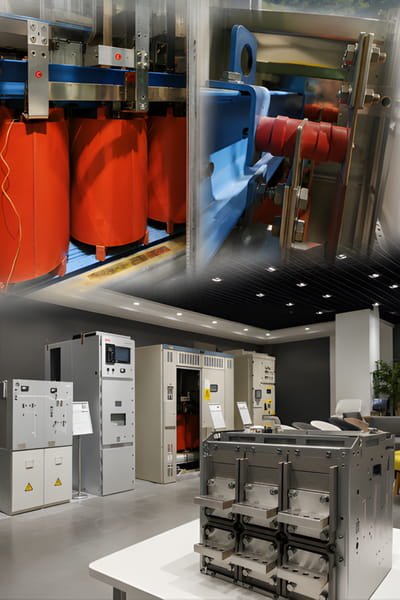
Electrical Electronics

Energy Storage & Battery

Lighting, HVAC & Heating

Infrastructure & Construction

Renewable Energy

Telecommuincation

Vehilce

PowerTransmission
Quality assurance
Quality Continuous
Improvements
Global Quality Experience
Quality practices shaped by cooperation with leading international electrical enterprises.
PFMEA-Based Process Control
Risk identification and process tracking from design to production.
PPAP-Driven Quality Management
Full-dimensional detail control for samples, production approval, and consistency.

Latest Blog & News
Explore the world of composite manufacturing. Deepen your knowledge of GFRP, SMC, and BMC materials, molding technologies, and the engineering behind high-performance formed components.

BMC Material for Electrical Insulators: Properties, Requirements and Material Selection
Selecting a BMC material for electrical insulators requires more than comparing dielectric-strength values. A reliable BMC electrical insulator must combine electrical insulation, tracking resistance, mechanical load capacity, moisture resistance, flame behavior, dimensional stability and insert retention. Whether the application is

SMC Material for Electrical Cabinets: Properties, Requirements and Material Selection
Selecting an SMC material for electrical cabinets involves far more than confirming that the material is electrically insulating. An SMC electrical cabinet or SMC electrical enclosure may also require tracking resistance, flame retardancy, mechanical strength, weather resistance, dimensional stability and

BMC Manufacturing Process: From Raw Materials to Finished Bulk Molding Compound
A stable BMC manufacturing process is not simply a matter of mixing resin, filler and glass fiber. In real production, BMC manufacturing, BMC material manufacturing and BMC compound manufacturing depend on accurate BMC formulation, controlled BMC raw material dosing, consistent
Join Us
Ready to Explore the Opportunities
SUSDURA Has to Offer?
We look forward to partnering with you to create endless possibilities together.
Click Here »