Precision Tooling for Advanced Composite Materials
Composite materials are materials with new properties composed of two or more materials with different properties through physical or chemical methods. With the broadening application field of composite materials, the forming process has developed rapidly — older methods are being refined day by day, while new forming techniques keep emerging. Common processes include hand lay-up, injection molding, resin transfer molding (RTM), compression molding (BMC, SMC), and vacuum infusion molding.
To make high-precision composite products, composite molds are the most important part of the entire production process, since the shape and appearance of the product is guaranteed by the mold. A composite material mould typically places the composite material into a hot pressing mold, then melts it by heating. An ejection mechanism inside the mold pushes the formed product out once complete. Common heating methods for composite material molds include oil heating, electric heating, and steam heating.
Composite molds vary widely depending on the industry and application, covering automotive, electrical, sanitary, building materials, aerospace and many other fields. Compared with metal molds, composite molds offer a number of advantages — so what exactly makes them worth choosing?
Six Advantages Over Metal Molds
From strength-to-weight ratio to long-term durability, composite tooling brings measurable benefits to production.
The specific strength and specific stiffness of the composite mould are relatively high, which means the tooling carries more load per unit of weight than a comparable metal mold, easing handling and installation.
The mechanical properties of the composite material mould can be designed — the component or structure can meet use requirements by selecting suitable raw materials and reasonable lay-up forms, so performance is tailored rather than fixed.
The composite mould has good fatigue resistance, so it withstands repeated heating, cooling and clamping cycles over long production runs without premature cracking or loss of dimensional accuracy.
The vibration damping performance of the composite material mould is good, absorbing press-induced vibration during molding to protect surface finish and extend the working life of the tool.
Composite molds are usually resistant to high temperatures, staying dimensionally stable through repeated heating cycles and holding their shape even under sustained thermal load in production.
The safety of the composite material mould is good — the material is less prone to sudden brittle failure than metal, lowering risk to operators during high-volume, high-pressure production.
A Mature Composite Mould Manufacturer in China
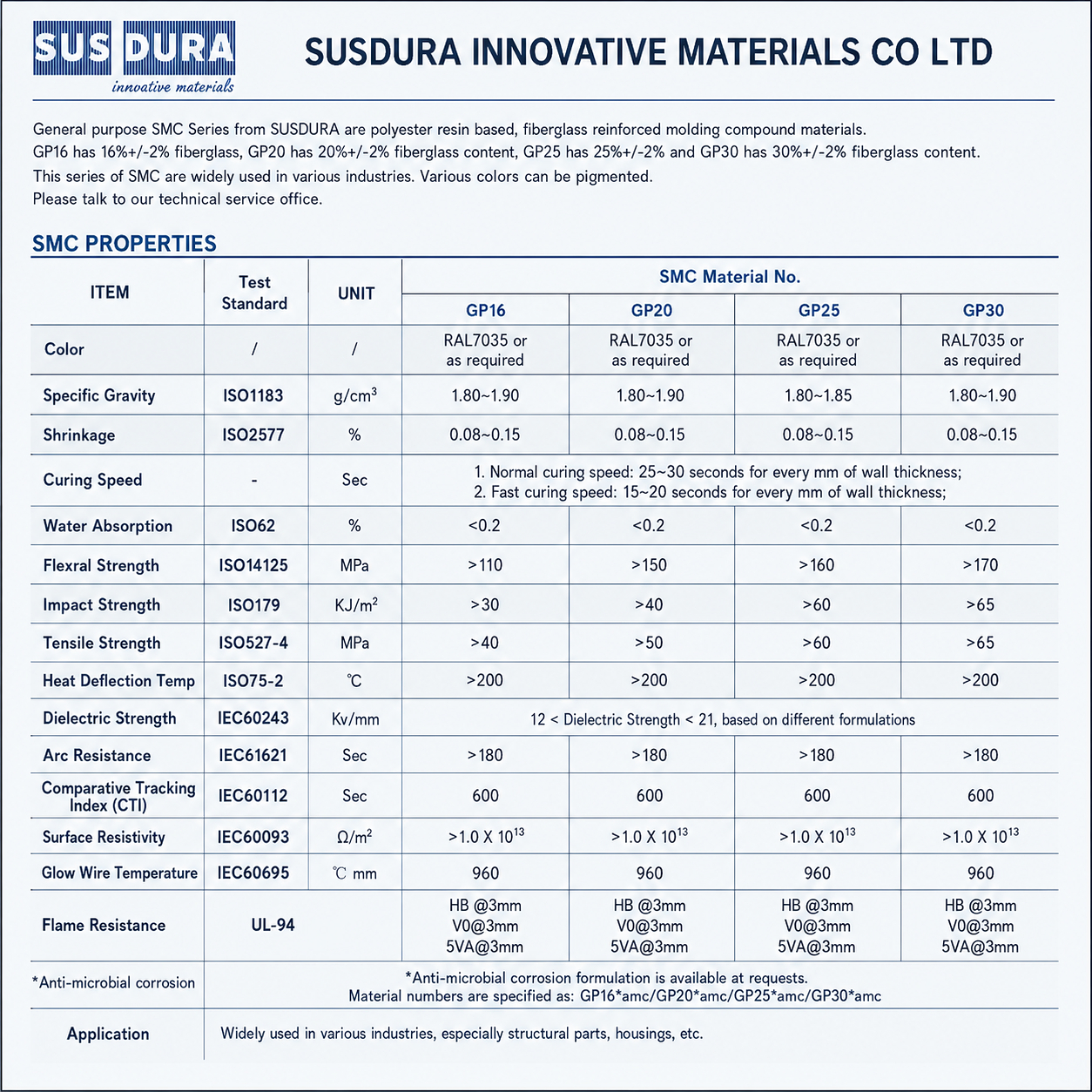
MDC manufactures various types of glass fiber composite molds (glass fiber reinforced plastic molds, such as SMC, BMC, GMT, LFT), carbon fiber composite molds, and LWRT composite molds.
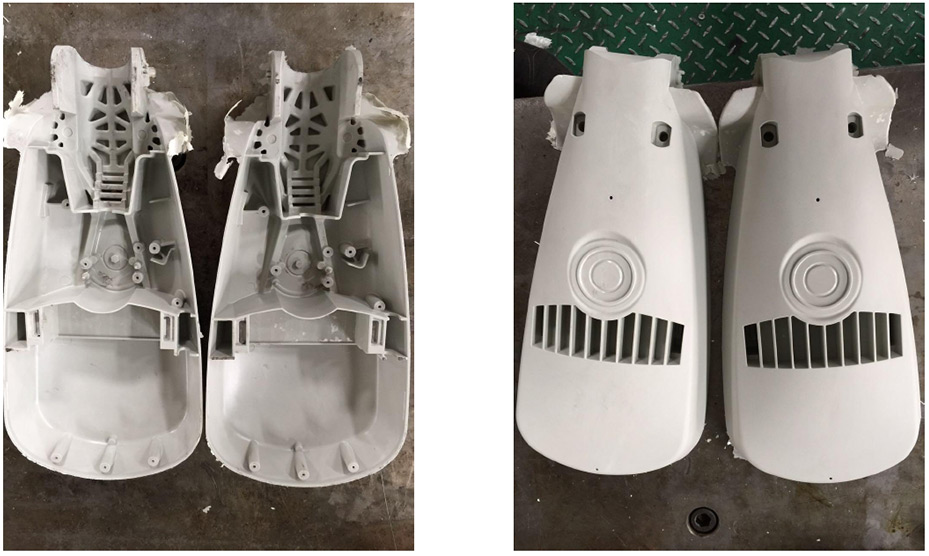
The molds we manufacture include spoiler templates, fenders, bumpers, and front panel molds for trucks; hoods, doors, bottom guards, roofs, seat backs, and luggage molds for cars; electrical appliance boxes; and bathroom door basin molds, among others. The composite material molds we produce have been effectively optimized, with longer service life, lower manufacturing costs, and higher precision products.